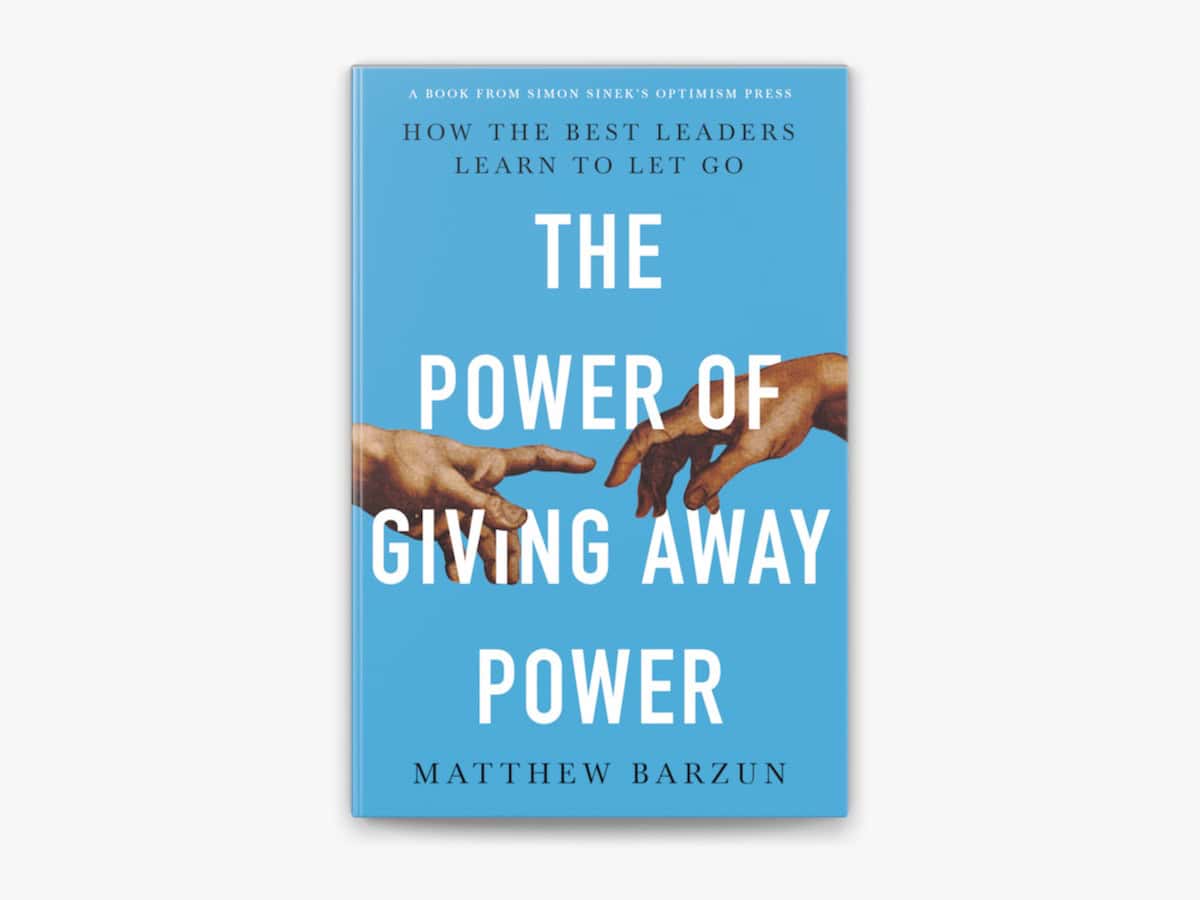
Matthew Barzun’s The Power of Giving Away Power is a timely and quietly radical challenge to how we think about leadership, teams, and achievement. Rather than reinforcing the familiar “hero leader” or individual-contributor mindset, Barzun invites us to scrap the pyramid altogether. In its place, he offers something far more human, more demanding, and ultimately more powerful: interdependence.
At the heart of the book is a simple but transformative idea. The best teams do not operate as isolated individual contributors climbing a hierarchy. They function as ecosystems. In healthy systems, we expect to need others, expect to be needed, and expect to be changed by the process of working together. Success is no longer framed as winning versus losing, but as playing, engaging, and making big things together. Achievement becomes collective. Power multiplies when it is shared.
Barzun speaks of the “pyramid mindset” and how it trains us to view people in terms of roles, rank, and utility. This leads to what he calls routine relationships – interactions defined by function rather than humanity. In routine relationships, we are the jobs we perform for one another. At work, we treat each other as parts of a machine, or worse, as a means to an end. It’s efficient, but brittle. It drains energy rather than creating it.
In contrast, Barzun introduces special relationships, which are not friction-free but friction-filled in the best possible way. This is what he calls fruitful friction. Special relationships create space for humanity – for perspectives, emotions, uncertainty, and growth. They require us to factor in more voices, discuss personal and uncomfortable issues more often, and show up differently. That added complexity might feel inefficient at first, but Barzun argues that welcoming this friction generates energy instead of depleting it.
One of the most practical and compelling ideas in the book is simple: ask everyone. “Don’t try to win an argument, no matter how justified or compelling your case may seem. Instead, sit everyone in a circle and ask each person to share.” Something remarkable happens when people are consistently asked for their perspectives. Over time, they don’t just offer answers – they begin to discover themselves and their voices. Being asked is an act of respect. It signals trust. And trust unlocks contribution.
Barzun illustrates this dynamic through the snowflake model. Unlike the pyramid, the snowflake grows outward. When leaders ask, involve, and empower others, the system expands with the energy of respect and inclusion. Each new connection captures and generates more energy, creating a virtuous cycle. Giving away power doesn’t weaken the center – it strengthens the whole.
The book concludes with five mantras that serve as a challenge:
- Change your mindset
- Share your inner voice
- Work through hard things together
- Give up power to make more
- Embrace uncertainty
These are daily practices. And they resonate deeply with the work we do at Lead Vantage.
Here are some questions to get you thinking about how you can live and breathe these five practices:
Change Your Mindset
- Where am I still operating from a pyramid mindset instead of an ecosystem mindset?
- In what situations do I default to being the expert rather than the participant?
- What assumptions do I hold about leadership, authority, or control that may no longer serve my team?
- If success were truly collective, what would I do differently this week?
Share Your Inner Voice
- What am I thinking but not saying and why?
- What feels risky about being more transparent right now?
- How might sharing uncertainty or curiosity create space for others to contribute?
- If I modeled vulnerability first, what might that unlock in the room?
Work Through Hard Things Together
- What tension, conflict, or “elephant in the room” am I avoiding?
- Who needs to be part of this conversation that currently isn’t?
- Am I trying to resolve this quickly or understand it deeply?
- How could engaging more perspectives transform this challenge into shared ownership?
Give Up Power (to Make More)
- Where am I holding onto decision-making, information, or authority out of habit rather than necessity?
- Who else could lead this if I stepped back?
- What might become possible if I trusted others with more responsibility?
- How can I measure success not by my influence, but by the growth of others?
Embrace Uncertainty
- Where am I pretending to have answers instead of inviting exploration?
- What would it look like to treat not-knowing as a strength rather than a weakness?
- How can I create psychological safety for experimentation and learning?
- If the outcome is unclear, how can the process still be meaningful and energizing?
At Lead Vantage, our impact is not built on individual brilliance or top-down authority. It’s built on ecosystems – leaders, teams, and clients working interdependently to create sustainable growth. Barzun’s framework reinforces what we see every day: when leaders shift from controlling outcomes to cultivating relationships, performance follows. When we replace routine relationships with special ones, we unlock trust, innovation, and shared ownership. When we ask more and tell less, people step into their full capacity.

As leaders, coaches, and teammates, the challenge is clear. This week, ask more questions than you answer. Invite voices that are usually quiet. Create space for fruitful friction instead of avoiding it. Let go of a little power and watch what grows in its place. If we want stronger teams, better decisions, and more meaningful work, the path forward isn’t climbing higher on the pyramid. It’s growing the snowflake together.
To learn more about what we do at Lead Vantage check out our website: https://leadvantage.ca/