
There was a time when I equated being busy with being effective.
A full calendar meant I was needed.
Quick responses meant I was on top of things.
Long days meant I was committed.
But over time, I started to notice something.
The more I filled my days, the less space I had to actually think.
The more responsive I became, the more reactive I felt.
And the busier I was, the harder it became to focus on what truly mattered.
That’s when I began to question a belief many leaders still carry:
That doing more leads to better leadership.
It doesn’t.
The Busyness Trap
Today’s work environment rewards speed.
Faster decisions. Faster responses. More output.
Add in technology and AI, and the expectation increases even further. We can process information quickly, generate ideas instantly, and move work forward at a pace that wasn’t possible before.
But here’s the tension:
Just because we can do more doesn’t mean we should.
In fact, many high-performing leaders find themselves overwhelmed not because they lack capability—but because they haven’t created enough space to use it well.
Busyness feels productive.
Effectiveness requires intention.
What High-Performing Leaders Do Differently
At some point, there’s a shift.
Leaders begin to realize that their value isn’t in how much they do—it’s in how well they think, prioritize, and lead others.
That often means doing less.
Less reacting.
Less overcommitting.
Less holding onto work that others could own.
And more:
Clarity.
Focus.
Deliberate action.
I’ve had moments where stepping back—saying no, delaying a response, or not jumping into a problem—felt uncomfortable at first. But those were often the moments that created better outcomes, not worse.
Because effectiveness isn’t about activity.
It’s about impact.
The Hidden Cost of Doing More
When leaders operate in constant motion, there are trade-offs:
- Decisions become rushed instead of thoughtful
- Teams become dependent instead of accountable
- Communication becomes frequent, but not always clear
- Energy gets spent on urgency rather than importance
Over time, this doesn’t just affect performance—it affects how leaders show up.
When you’re stretched thin, your presence changes.
You become less patient, less curious, and more directive.
And your team feels that shift.
Small Shifts That Make an Immediate Difference
You don’t need a complete overhaul to move from busy to effective.
A few intentional shifts can create noticeable impact right away:
- Pause before responding
Not every message requires an immediate reply. Give yourself time to think, especially on decisions that matter. Or, simply to send a message you are not available 24/7. - Ask, don’t answer
When your team brings a question, resist the urge to solve it. Ask, “What do you think?”
This builds ownership and reduces dependency. - Protect thinking time
Even 20–30 minutes of uninterrupted time in your day can improve the quality of your decisions. - Clarify what actually matters today
At the start of the day, identify 1–3 priorities that truly move things forward. Let that guide your focus. - Let something go
Look at your current workload and ask: What am I holding onto that someone else could take on?
Redefining Effectiveness
High-performing leaders aren’t effective because they do more.
They’re effective because they:
- Focus on what matters most
- Create clarity for others
- Build capability within their teams
- Show up with intention, not just availability
And perhaps most importantly, they understand that their role isn’t to be everywhere—it’s to be impactful where it counts.
A Final Thought
Letting go of busyness isn’t always easy.
It can feel like you’re stepping back when in reality, you’re stepping into a different kind of leadership.
One that prioritizes thinking over reacting.
Clarity over activity.
Impact over effort.
Because in today’s environment, the leaders who stand out aren’t the ones doing the most.
They’re the ones doing what matters.
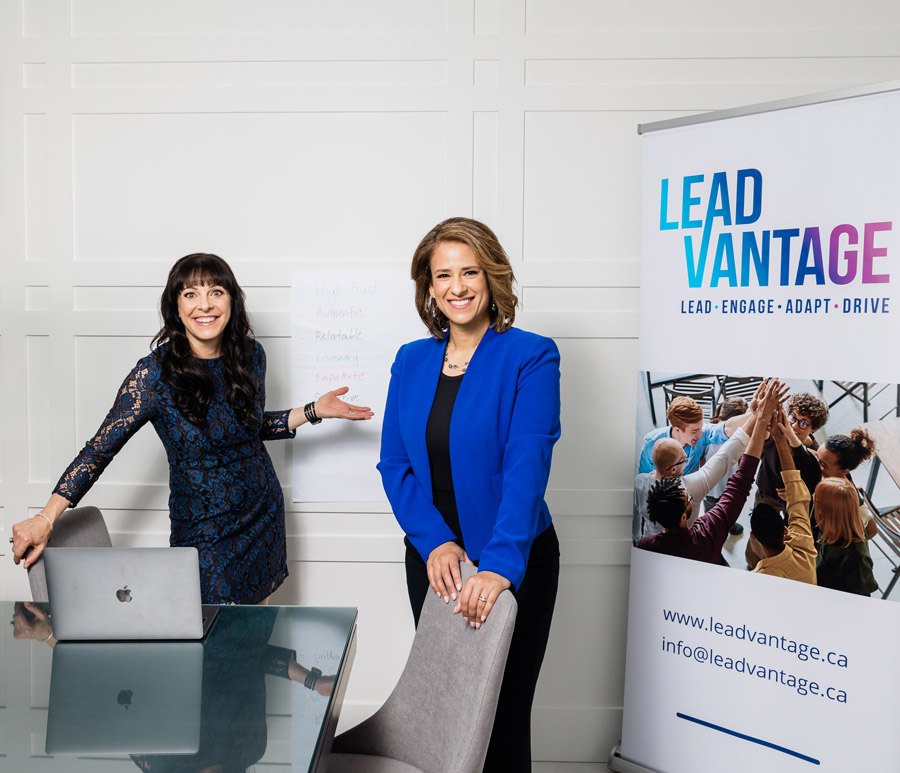
If you’re feeling stretched, pulled in multiple directions, or caught in the cycle of doing more without seeing greater impact, you’re not alone. Leadership today requires clarity, focus, and intentional choices.
If you’d value a confidential space to step back, think clearly, and lead more effectively, our leadership coaching can help. We also work with leaders and teams to build practical skills in time management, leverage, and delegation—so you can create more space for what truly matters.
Connect with us to learn how we support leaders, or visit https://leadvantage.ca/programs/ to learn more.