Accountability Isn’t a Buzzword—It’s a Leadership Behaviour
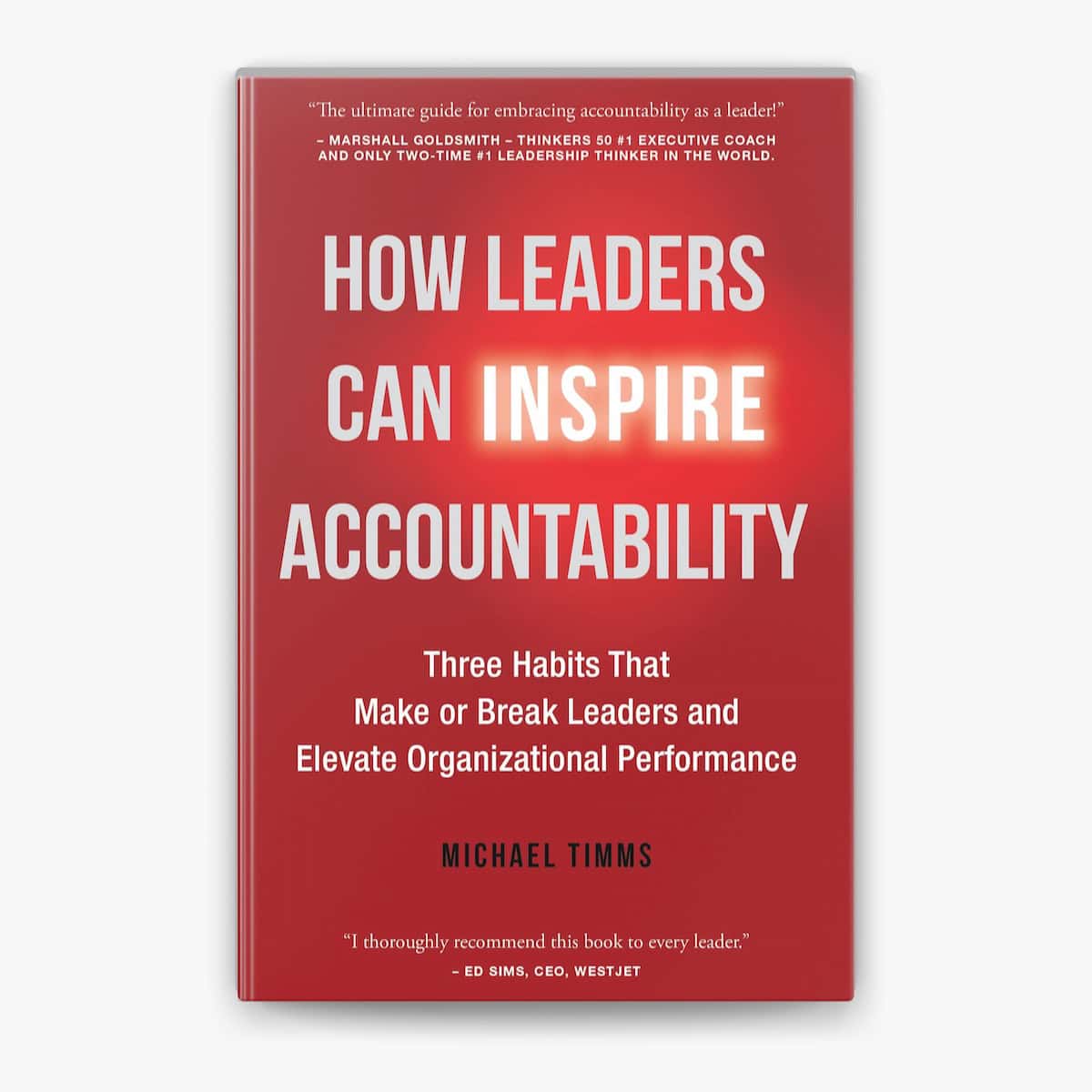
“Most leaders fail to realize that before they can instill accountability in others, they must become the supreme example of accountability within their organization.” — Michael Timms
Let’s start with a truth that most leaders know—but don’t always act on:
You can’t expect accountability from your team if you’re not modelling it yourself.
Accountability isn’t something you announce in a team meeting. It’s something people experience through your actions—especially when things go sideways.
The good news? Building accountability doesn’t require a massive reset. It’s built through small, consistent leadership behaviours that shape how your team thinks, acts, and follows through.
Why Accountability Matters (More Than You Think)
When accountability is strong, teams move faster and with more confidence.
People take initiative instead of waiting for direction.
Decisions stick.
Follow-through becomes the norm—not the exception.
But when accountability is weak, leaders often find themselves stuck in a frustrating loop:
- Repeating expectations
- Chasing updates
- Stepping in to fix things that shouldn’t be theirs to fix
And over time, that creates a hidden cost: leaders become bottlenecks, and teams become dependent.
Accountability, at its core, is what allows leaders to lead—rather than constantly having to manage.
The 3 Hidden Problems That Quietly Undermine Accountability
Before you can build accountability, you have to remove what’s blocking it.
1. It Feels Like Blame
If accountability only shows up when something goes wrong, people will avoid it.
They’ll deflect, justify, or stay quiet—anything to not be “the one responsible.”
Leadership shift:
Make accountability about learning and ownership, not punishment.
👉 Instead of: “Why did this happen?”
Try: “What did we learn, and what will we do differently next time?”
2. It’s Not Clear Enough
Leaders often assume clarity… while teams are operating on interpretation.
And interpretation is where accountability goes to die.
Leadership shift:
Clarity is not what you said—it’s what others understood.
👉 A simple habit:
At the end of a conversation, ask:
“Just to confirm—what are you taking away as your next step?”
3. Leaders Rescue Too Quickly
This one is subtle—and very common.
When leaders step in to fix, rework, or take over, they unintentionally send the message:
👉 “I’ve got this—you don’t need to.”
Over time, ownership erodes.
Leadership shift:
Pause before jumping in. Ask:
“What’s your plan to move this forward?”
(Yes, it might take longer. But it builds capability—and accountability.)
What Accountability Actually Means
Let’s simplify it:
Accountability = Ownership + Follow-through
It’s not about perfection. It’s about people taking responsibility for outcomes—and doing what they said they would do.
Michael Timms highlights three personal habits that strengthen accountability at the leadership level:
1. Don’t Blame
Blame might feel satisfying in the moment—but it shuts down ownership instantly.
Quick win:
Replace blame with curiosity.
👉 Ask: “What got in the way?” instead of “Who messed this up?”
2. Look in the Mirror
Accountability starts with self-awareness.
Before expecting more from your team, ask:
👉 “Where might I be contributing to this outcome?”
This could be:
- Unclear expectations
- Inconsistent follow-up
- Avoiding tough conversations
This is where real leadership begins.
3. Engineer the Solution
Here’s the shift most leaders miss:
Accountability is not about trying harder—it’s about designing better systems.
If your team has to rely on memory, motivation, or good intentions… accountability will always be inconsistent.
So instead of asking, “Why aren’t people more accountable?”
Ask: “How have we designed the environment?”
Four Practical Strategies to Build Accountability Into Everyday Work
These aren’t big initiatives—they’re small shifts that create immediate impact.
#1 Make Reality Transparent
People can’t take ownership of what they can’t see.
If priorities, progress, or expectations are hidden in emails or in your head, accountability disappears.
Quick wins:
- Use visible trackers (even a simple shared doc works)
- Start meetings with a quick “where are we at?” check
- Make commitments public within the team
👉 Visibility creates ownership.
#2 Clarify the Critical Steps
Many leaders communicate outcomes—but skip the clarity on how to get there.
That’s where breakdowns happen.
Quick wins:
- Define what success looks like (not just the deadline)
- Break work into clear next steps
- Always confirm ownership
👉 Try this in your next meeting:
“Who owns this, and what’s the very next step?”
#3 Automate the Right Behaviours
If something matters, don’t leave it to chance.
Quick wins:
- Build in regular check-ins (weekly, bi-weekly)
- Use calendar reminders for follow-ups
- Create simple routines (e.g., always ending meetings with commitments)
👉 The goal: make accountability the default, not the exception.
#4 Design the Environment
Your team’s environment is constantly reinforcing behaviour—whether you realize it or not.
So ask yourself:
👉 “Is our environment making accountability easier… or harder?”
Quick wins:
- Begin meetings by reviewing prior commitments
- Acknowledge when people follow through (consistency matters more than size)
- Create space for people to speak up early when things go off track
👉 What gets recognized—and reinforced—gets repeated.
Final Thought: Accountability Is Built in Small Moments
Accountability doesn’t come from a policy, a performance review, or a one-time conversation.
It’s built in the everyday moments:
- The questions you ask
- The clarity you create
- The behaviours you model
So, if you’re looking for a place to start, keep it simple:
👉 Ask a better question
👉 Clarify one expectation
👉 Follow up on one commitment
Because accountability doesn’t start with your team.
It starts with you.

At Lead Vantage LLP, we believe leadership isn’t about titles—it’s about impact. We help leaders build the mindset, skills, and habits to lead with clarity, accountability, and confidence. Connect with us at info@leadvantage.ca to learn more.